PFMS Fund Flow Monitoring: How It Ensures Last-Mile Delivery
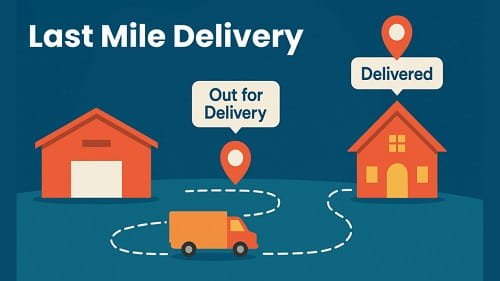
In a country as vast as India, getting government funds from the Centre to the final beneficiary is not easy. Money passes through multiple levels—ministries, states, districts, agencies—and at each stage, delays or leakages can occur.
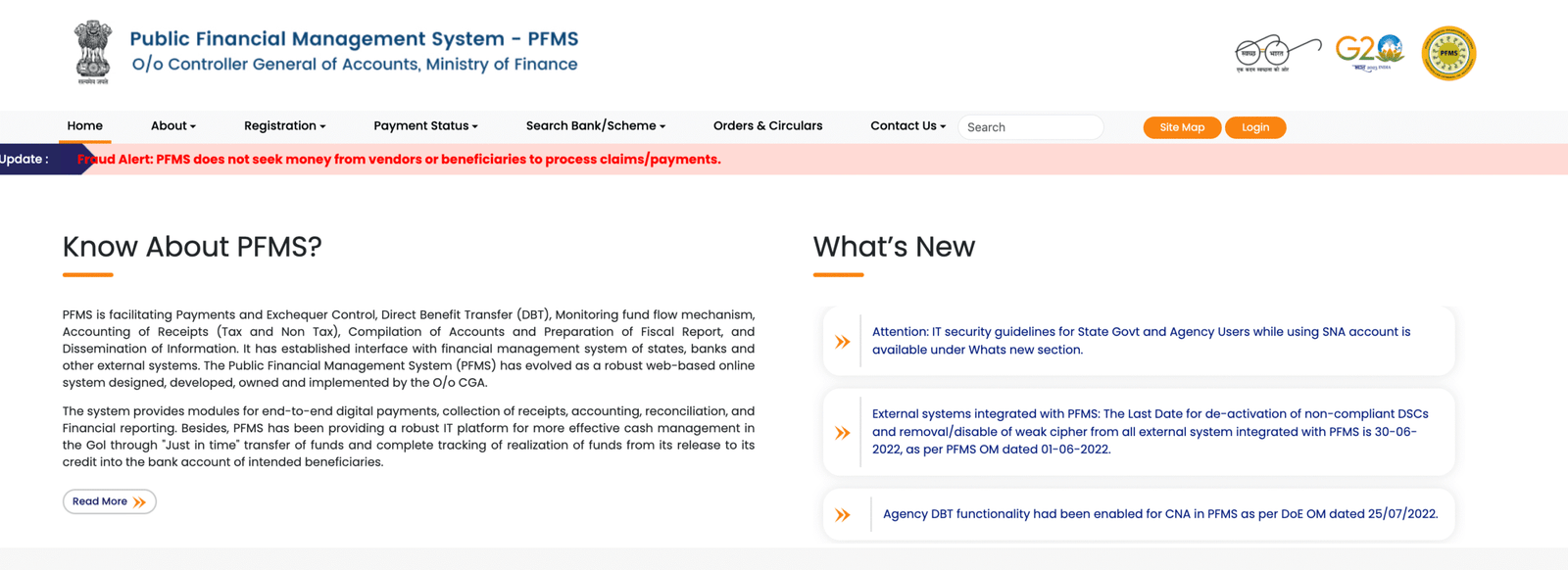
PFMS (Public Financial Management System) solves this by monitoring the entire fund flow digitally, from allocation to the last mile. It doesn’t just track money—it ensures it actually reaches the intended person or project.
What “Fund Flow Monitoring” Means in PFMS
Fund flow monitoring is the process of tracking:
- Where funds are released
- How they move through different levels
- When and where they are finally used
👉 PFMS portal: https://pfms.nic.in/Home.aspx
PFMS captures this journey step by step, without relying on manual reports.
Why Last-Mile Delivery Is a Challenge
Earlier, the system faced several issues:
- Funds stuck at intermediate levels
- Delays in transfers
- Lack of visibility
- Risk of misuse or diversion
This meant that even approved funds sometimes didn’t reach beneficiaries on time.
How PFMS Tracks Funds End-to-End
1. Recording Fund Allocation
When the government allocates funds:
- PFMS records scheme details
- Allocation amount is logged
- Linked to ministry and program
This creates the starting point.
2. Tracking Fund Releases
As funds are released:
- Each transfer is recorded
- Destination (state, agency, etc.) is captured
- Timeline is tracked
This ensures visibility at every stage.
3. Monitoring Movement Across Levels
Funds often move through:
- Central → State → District → Agency
PFMS tracks each layer:
- Who received funds
- When they were received
- How much remains
4. Direct Benefit Transfer (DBT) Integration
For beneficiary schemes:
- Funds are sent directly to bank accounts
- PFMS records transaction instantly
- Eliminates intermediate layers
This is key for last-mile delivery.
5. Real-Time Payment Tracking
PFMS shows:
- Successful payments
- Pending transactions
- Failed transfers
This helps fix issues quickly.
6. Utilization Monitoring
PFMS tracks:
- Amount spent
- Balance remaining
- Purpose of expenditure
This ensures funds are actually used.
Key Features That Ensure Last-Mile Delivery
1. Real-Time Visibility
Authorities can see where funds are at any moment.
2. Elimination of Middle Layers
DBT reduces dependence on intermediaries.
3. Digital Transaction Records
Every payment is recorded and traceable.
4. Bank Integration
PFMS connects with hundreds of banks for direct transfers.
5. Aadhaar-Based Payments
Ensures money reaches the correct individual.
How PFMS Prevents Leakages
1. Direct Transfers
Funds go straight to beneficiaries.
2. Validation Checks
Bank and Aadhaar details are verified before payment.
3. Duplicate Detection
Prevents multiple payments to the same person.
4. Monitoring Dashboards
Officials can identify irregularities quickly.
Role of Dashboards and MIS Reports
PFMS dashboards help officials:
- Track scheme-wise fund flow
- Monitor district-level performance
- Identify delays or bottlenecks
👉 PFMS reports: https://pfms.nic.in/SitePages/Reports.aspx
These tools make monitoring easier.
Practical Impact on Beneficiaries
1. Faster Payments
Funds reach beneficiaries without long delays.
2. Reduced Corruption
Less human intervention reduces misuse.
3. Increased Trust
People feel confident about receiving benefits.
4. Better Service Delivery
Schemes work more effectively on the ground.
Challenges in Last-Mile Delivery
Despite improvements, some issues remain:
- Incorrect bank details
- Aadhaar linkage problems
- Connectivity issues in rural areas
- Delay in data entry
These can affect final delivery.
Recent Improvements (2025–2026)
- Enhanced real-time tracking tools
- Better integration with banking and NPCI systems
- Improved failure detection and correction
- Expanded DBT coverage
These updates strengthen last-mile delivery.
Best Practices for Officials and Agencies
To ensure smooth fund flow:
- Verify beneficiary details carefully
- Update data regularly
- Monitor dashboards daily
- Resolve failed payments quickly
- Avoid delays in reporting
Consistency ensures success.
FAQs
1. What is fund flow monitoring in PFMS?
It is tracking funds from allocation to final utilization.
2. How does PFMS ensure last-mile delivery?
Through direct transfers, real-time tracking, and validation checks.
3. What is DBT in this context?
Direct Benefit Transfer sends money directly to beneficiary accounts.
4. Can PFMS track payments in real time?
Yes, most transactions are updated instantly.
5. Why do some payments fail?
Due to incorrect bank details, Aadhaar issues, or technical problems.
6. Is PFMS used in all schemes?
It is widely used across central government schemes.
Conclusion
PFMS has transformed how government funds move across the system. By tracking every stage of fund flow and enabling direct payments, it ensures that money reaches the last mile efficiently.
In a system handling millions of beneficiaries, even small delays can have big impacts. PFMS minimizes those delays and ensures that public funds fulfill their purpose—reaching the people who need them most.