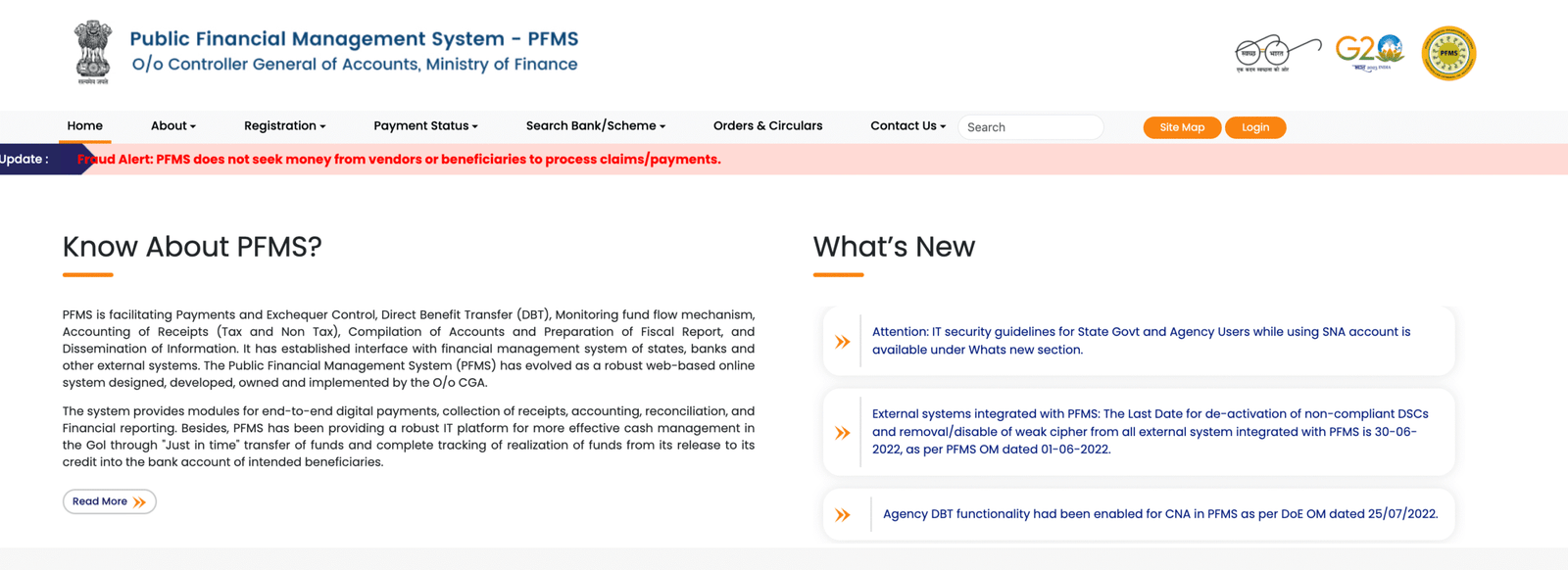
Just-in-Time Fund Release via PFMS: What It Means for Agencies
For years, government funding followed a familiar pattern—money was released in bulk to agencies, then held in their bank accounts until it was used. This often led to idle funds, delays, and weak tracking. The shift to Just-in-Time (JIT) fund release through PFMS (Public Financial Management System) has changed that model completely.
Today, agencies don’t receive large upfront amounts. Instead, funds are released exactly when a payment is due. It’s a simple idea, but it has big implications for how agencies plan, spend, and report money.

What “Just-in-Time” Really Means
Just-in-Time funding is exactly what it sounds like:
- Funds are released only at the time of actual payment
- No advance bulk transfers
- Payments are made directly to beneficiaries or vendors
👉 PFMS portal: https://pfms.nic.in/Home.aspx
This approach keeps money within government control until it is actually needed.
How It Works in Day-to-Day Operations
1. No Upfront Fund Holding
Agencies no longer maintain large balances.
- Funds stay in a central account
- Agencies cannot use funds until payment is approved
2. Payment Request Initiation
When an agency needs to make a payment:
- It enters details in PFMS
- Specifies beneficiary, amount, and purpose
- Submits request for approval
3. Validation by PFMS
PFMS checks:
- Budget availability
- Scheme eligibility
- Beneficiary bank details
Only valid requests move forward.
4. Instant Fund Release
Once approved:
- Funds are released immediately
- Payment is sent directly to the beneficiary/vendor
5. Real-Time Recording
PFMS records:
- Transaction details
- Date and amount
- Scheme information
Everything is tracked instantly.
What Changes for Agencies
The JIT system changes how agencies operate.
1. No Idle Funds
Earlier:
- Agencies held unused funds
Now:
- Funds are released only when required
2. Better Financial Discipline
Agencies must:
- Plan payments carefully
- Submit accurate requests
- Follow approval processes
3. Reduced Administrative Burden
No need to:
- Manage multiple fund accounts
- Track idle balances
4. Faster Payments
Once approved:
- Payments are processed quickly
- Beneficiaries receive money faster
Key Benefits of JIT Fund Release
1. Eliminates Fund Parking
Money is not stuck in agency accounts.
2. Improves Transparency
Every payment is visible and recorded.
3. Reduces Misuse of Funds
Limited control over funds prevents diversion.
4. Enhances Cash Management
Government can manage liquidity better.
5. Supports Real-Time Monitoring
Authorities can track spending instantly.
Impact on Different Types of Agencies
For NGOs and Implementing Agencies
- Must submit payment requests instead of using pre-funded accounts
- Need to maintain accurate data
For State-Level Agencies
- Better coordination with central systems
- Improved reporting requirements
For Departments
- More control over fund usage
- Easier monitoring of scheme performance
Challenges Agencies May Face
While JIT improves efficiency, it also brings some challenges:
- Dependence on timely approvals
- Need for digital skills and system familiarity
- Delays if data entry is incorrect
- Adjustment from old fund management practices
With time, most agencies adapt to the system.
Recent Developments (2025–2026)
- Expansion of JIT model across more schemes
- Faster approval workflows in PFMS
- Improved dashboards for tracking payments
- Better integration with banking systems
👉 PFMS features: https://pfms.nic.in/SitePages/Features.aspx
These updates are making JIT smoother.
Best Practices for Agencies
To work effectively under JIT:
- Prepare payment requests in advance
- Ensure accurate beneficiary details
- Monitor approvals regularly
- Avoid last-minute submissions
- Train staff on PFMS usage
Planning is key in a JIT system.
Common Misunderstandings
“Funds are delayed under JIT”
Not necessarily—delays usually happen due to incomplete data or approvals.
“Agencies lose control over funds”
They don’t lose control; they follow a structured system for better accountability.
FAQs
1. What is Just-in-Time fund release?
It is a system where funds are released only when a payment is required.
2. Do agencies receive funds in advance?
No, funds are released at the time of payment.
3. How does PFMS support JIT?
PFMS validates requests and processes payments instantly.
4. Does JIT delay payments?
No, it often speeds up payments if data is correct.
5. Why was JIT introduced?
To reduce idle funds, improve transparency, and ensure better financial control.
6. Can agencies track payments under JIT?
Yes, all transactions are recorded and visible in PFMS.
Conclusion
Just-in-Time fund release through PFMS is a major shift in how government money is managed. It replaces bulk funding with a more precise, controlled, and transparent system.
For agencies, this means less idle money, better accountability, and faster payments—provided they adapt to the new workflow. In the long run, JIT doesn’t just improve efficiency; it ensures that public funds are used exactly when and where they are needed.