How Ministries and Departments Use PFMS for Expenditure Reporting
In government, spending money is only half the job. The other half—often more important—is proving where that money went, how it was used, and whether it delivered results. For ministries and departments handling large budgets, this is a daily task.
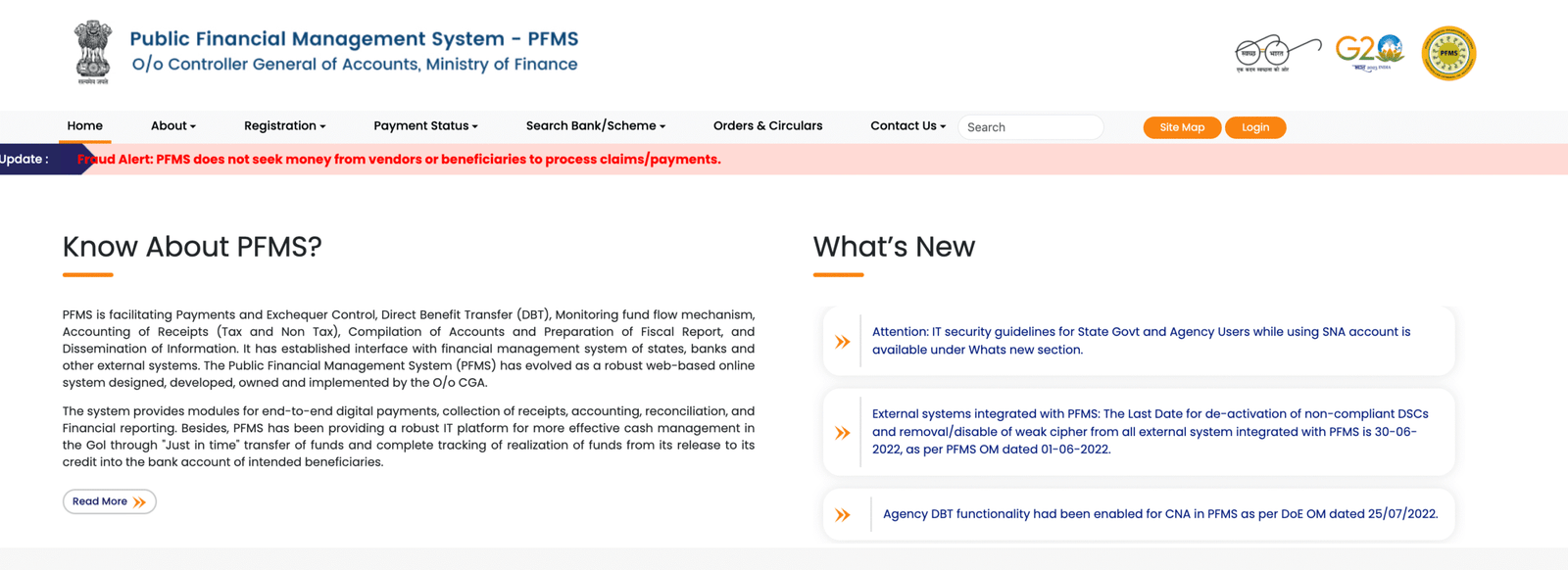
PFMS (Public Financial Management System) has become the central system that makes this possible. It turns scattered financial data into structured, real-time reports that ministries rely on for decision-making, compliance, and accountability.
Why Expenditure Reporting Is So Important
Every ministry receives funds under different heads:
- Scheme expenditure
- Administrative expenses
- Grants and transfers
These must be reported accurately because:
- Future fund releases depend on it
- Parliament and auditors review it
- Policy decisions are based on it
👉 PFMS portal: https://pfms.nic.in/Home.aspx
Without proper reporting, even well-executed schemes can face funding delays.
How PFMS Fits Into Ministry-Level Reporting
PFMS acts as a central reporting platform where all financial data comes together.
- Ministries upload and track expenditures
- Data is collected from departments and agencies
- Reports are generated automatically
It replaces manual reporting systems with a digital, unified approach.
Core Functions of PFMS in Expenditure Reporting
1. Real-Time Expenditure Tracking
Ministries can monitor:
- Total spending under each scheme
- Daily or periodic expenditure updates
- Remaining budget balance
This allows quick decision-making.
2. Scheme-Wise Reporting
PFMS provides detailed breakdowns:
- Central share vs state share
- Component-wise expenditure
- Project-level spending
This helps ministries track performance of individual schemes.
3. Consolidation of Data from Multiple Sources
Data flows into PFMS from:
- Departments
- Implementing agencies
- State systems (in many cases)
PFMS consolidates all of it into one platform.
4. Automated Report Generation
Instead of manual compilation, PFMS generates:
- Monthly expenditure reports
- Financial summaries
- Utilization statements
These reports follow standard formats.
5. Monitoring of Fund Utilization
Ministries can check:
- Whether funds are being used properly
- Delays in spending
- Unused balances
This helps avoid inefficiencies.
Role of Dashboards in PFMS
PFMS dashboards are widely used by ministries.
They show:
- Scheme-wise expenditure status
- State-wise fund usage
- Pending balances
- Trend analysis
These visual tools make complex data easy to understand.
How PFMS Improves Accuracy in Reporting
1. Data Validation
PFMS checks:
- Incorrect entries
- Duplicate records
- Mismatches in fund usage
2. Single Source of Truth
All financial data is stored in one system, reducing confusion.
3. Reduced Manual Work
Automation minimizes human errors.
Importance for Ministries
1. Faster Decision-Making
Real-time data helps ministries act quickly.
2. Better Budget Management
Ministries can plan spending based on actual usage.
3. Improved Transparency
Clear reporting builds trust in governance.
4. Stronger Audit Readiness
Data is readily available for audits.
5. Efficient Fund Utilization
Helps identify underperforming areas.
Role in Fund Release Decisions
Expenditure reporting directly affects:
- Release of next installment
- Allocation of additional funds
- Performance evaluation of schemes
PFMS data is often used as the basis for these decisions.
Common Challenges Faced
Despite improvements, some issues remain:
- Delay in data entry from field levels
- Incomplete reporting by agencies
- Integration gaps with older systems
- Need for regular training
These challenges are gradually reducing.
Recent Developments (2025–2026)
- Enhanced dashboards with better visualization
- Faster report generation systems
- Improved integration with state and departmental systems
- Stronger data validation mechanisms
👉 PFMS reports section: https://pfms.nic.in/SitePages/Reports.aspx
These updates are making reporting more efficient.
Best Practices for Ministries
To use PFMS effectively:
- Ensure timely data updates
- Monitor dashboards regularly
- Verify data before report submission
- Train staff on PFMS tools
- Avoid last-minute reporting
Consistency improves accuracy.
Impact on Governance
PFMS has transformed expenditure reporting:
Earlier:
- Delayed reports
- Inconsistent data
- Limited visibility
Now:
- Real-time tracking
- Accurate reporting
- Data-driven decisions
This shift has improved overall governance.
FAQs
1. What is PFMS used for in ministries?
It is used for tracking, managing, and reporting government expenditure.
2. Can ministries generate reports directly from PFMS?
Yes, PFMS provides automated report generation.
3. Why is expenditure reporting important?
It ensures accountability and enables future fund releases.
4. Does PFMS track scheme-wise spending?
Yes, it provides detailed scheme-level data.
5. What happens if reporting is delayed?
Fund releases and scheme performance may be affected.
6. Is PFMS data used in audits?
Yes, it is a key source for financial audits.
Conclusion
For ministries and departments, PFMS has become the backbone of expenditure reporting. It brings together data from multiple sources, validates it, and turns it into meaningful reports.
In a system handling massive public funds, accuracy and transparency are critical. PFMS ensures that every rupee is accounted for—and that reporting is not just a formality, but a powerful tool for better governance.