How PFMS Prevents Leakage in DBT Payments
There was a time when government benefits didn’t always reach the right person. Funds passed through multiple layers—offices, departments, intermediaries—and somewhere along the way, money could get delayed, reduced, or even lost.
That’s what people mean by “leakage.”
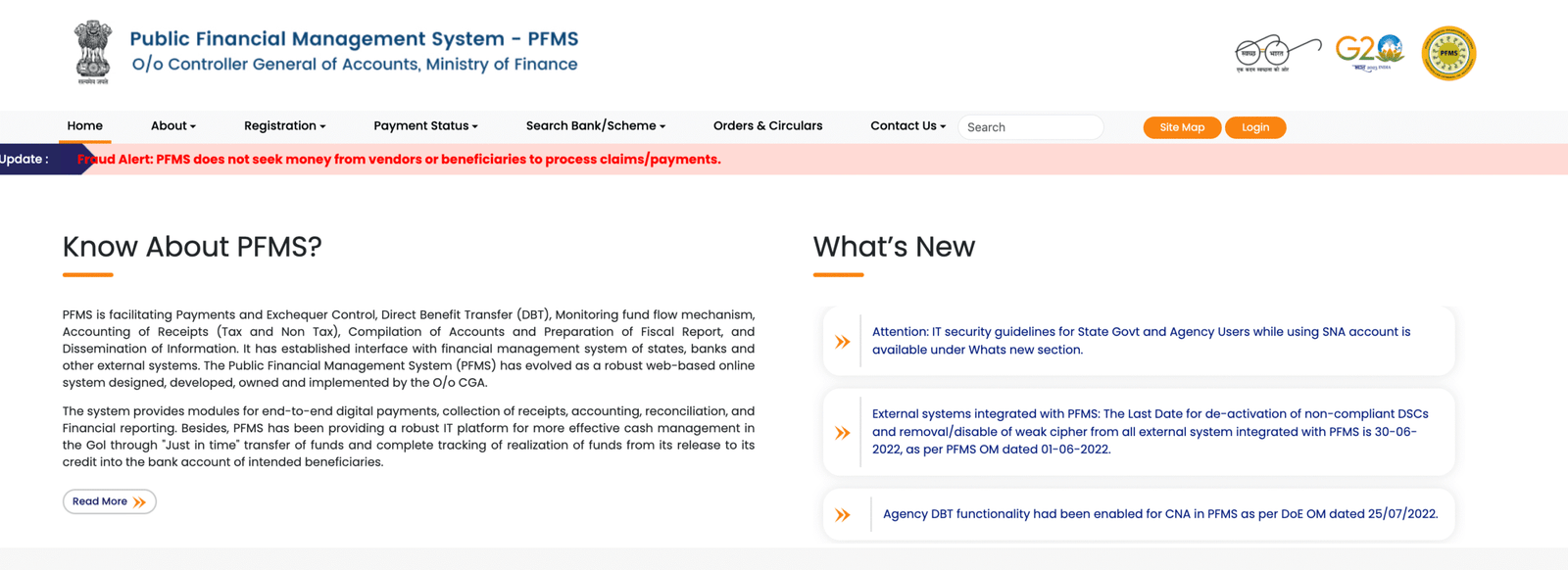
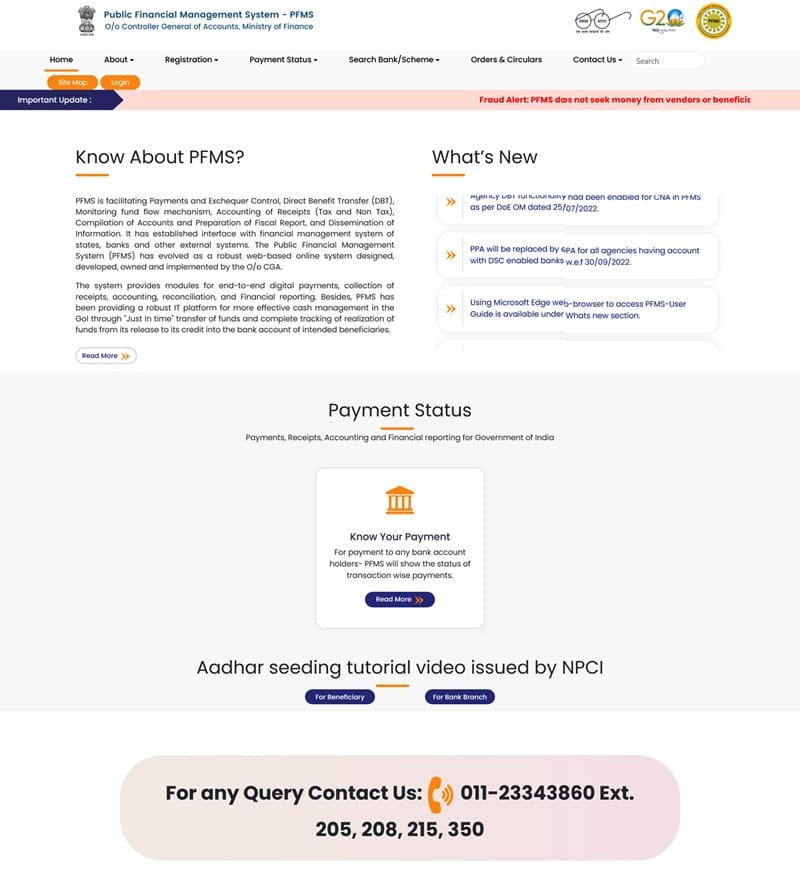
Today, this has changed significantly because of systems like the Public Financial Management System (PFMS) portal. PFMS plays a central role in making sure government payments under DBT (Direct Benefit Transfer) reach the intended beneficiary without loss or manipulation.
Let’s understand how it actually prevents leakage.
What is Leakage in DBT?
Leakage refers to situations where:
- Money does not reach the actual beneficiary
- Payments are delayed or partially lost
- Fake or duplicate beneficiaries receive funds
This was a major problem in older manual systems.
How PFMS Prevents Leakage
PFMS doesn’t rely on just one solution. It uses multiple checks and controls at every stage.
1. Direct Transfer to Bank Accounts
The biggest change is simple:
- Money goes directly from government to beneficiary
- No intermediaries involved
Result:
- No chance of middlemen taking a share
- Full amount reaches the account
2. Aadhaar-Based Verification
In many schemes, Aadhaar is used to verify identity.
- Each person has a unique Aadhaar number
- Prevents duplicate entries
Result:
- One person = one benefit
- Fake beneficiaries are reduced
3. Bank Account Validation
Before payment is processed, PFMS checks:
- Account number validity
- IFSC code
- Account status
Result:
- Payments don’t go to wrong accounts
- Errors are caught early
4. Real-Time Tracking of Funds
PFMS tracks every transaction from start to finish.
- Funds can be monitored at each stage
- Authorities can see where money is
Result:
- No hidden movement of funds
- Full transparency
5. Digital Approval System
All approvals happen digitally.
- No manual handling
- No paper-based delays
Result:
- Reduced human interference
- Less chance of manipulation
6. Elimination of Ghost Beneficiaries
Earlier, fake names could be added to beneficiary lists.
PFMS prevents this by:
- Cross-checking data
- Using Aadhaar and bank validation
Result:
- Only genuine beneficiaries receive payments
7. Integration with Banking System
PFMS is directly connected with banks.
- Payments go through secure banking channels
- No manual cash handling
Result:
- Safer transactions
- Reduced fraud
8. Automated Payment Processing
Payments are processed automatically based on data.
- No manual intervention in transfer
- System-based execution
Result:
- Consistency
- Reduced human error
9. Audit and Reporting Features
PFMS maintains detailed records of:
- Every transaction
- Every approval
- Every fund movement
Result:
- Easy audits
- Accountability at every level
10. Beneficiary-Level Transparency
Beneficiaries can check their own payment status.
- Using PFMS “Know Your Payment”
- Using bank alerts
Result:
- People know if money is sent
- Reduces chances of hidden delays
Before PFMS vs After PFMS
Before PFMS
- Multiple intermediaries
- Manual processing
- Delays and corruption
- Lack of tracking
After PFMS
- Direct bank transfer
- Digital processing
- Real-time tracking
- Transparency and accountability
Real-Life Impact
Consider a scholarship payment:
Earlier:
- Money passed through departments
- Delay or deduction possible
Now:
- Approved on portal
- Sent to PFMS
- Credited directly to student’s account
Full amount, no cuts.
Common Misconceptions
“Leakage is completely eliminated”
Not entirely, but it is significantly reduced.
“PFMS alone prevents leakage”
PFMS works along with:
- Aadhaar
- NPCI
- Banking systems
“All errors are system faults”
Many issues come from:
- Incorrect details
- Bank problems
What You Should Do as a Beneficiary
Even with a strong system, your role matters.
- Provide correct bank details
- Keep account active
- Complete KYC
- Link Aadhaar if required
- Check payment status regularly
These steps ensure smooth payments.
FAQs
1. What is leakage in DBT?
It means loss or misdirection of funds.
2. How does PFMS reduce corruption?
By removing middlemen and using digital tracking.
3. Can payments still fail?
Yes, due to incorrect details or bank issues.
4. Is PFMS fully secure?
Yes, it uses banking-level security.
5. Can I track my payment?
Yes, through PFMS tracking system.
Final Thoughts
PFMS has changed the way government money moves. What was once a slow and uncertain process is now faster, more transparent, and far more reliable.
By combining direct transfers, digital validation, and real-time tracking, PFMS has reduced leakage to a great extent.
The system isn’t perfect, but it has made one thing clear:
The right money now reaches the right person, with far less chance of loss along the way.