How PFMS Tracks Funds for Central Sector Schemes
India runs hundreds of welfare and development schemes. Money flows from the central government to states, agencies, and finally to beneficiaries. Earlier, tracking this journey was slow and messy. That’s where the Public Financial Management System (PFMS) changed the game.
What is PFMS and how the website works
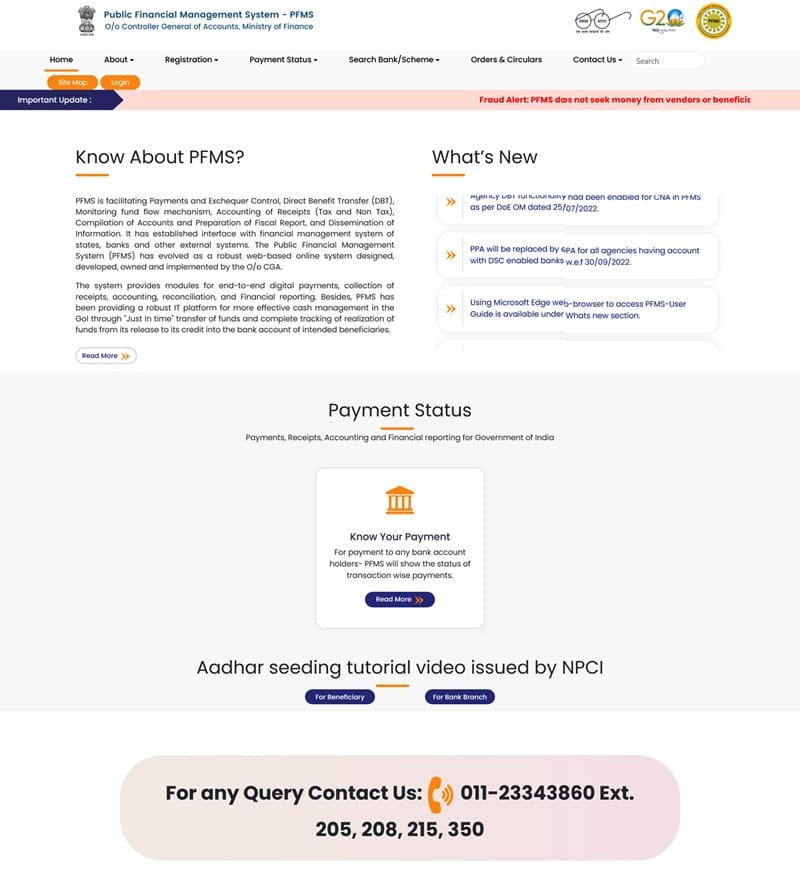
The Public Financial Management System (PFMS) is a web-based platform developed by the Controller General of Accounts under the Ministry of Finance. It was launched in 2009 to track funds released under government schemes and provide real-time expenditure reports.
The official website — Visit PFMS Portal — acts as a central dashboard. It connects ministries, banks, state treasuries, and implementing agencies into one system. The moment money is released, it gets recorded and tracked digitally.
The site offers services like:
- “Know Your Payment” status tracking
- Scheme-wise fund monitoring
- Direct Benefit Transfer (DBT) tracking
- Agency and vendor payments
- Financial reports and dashboards
Everything runs online, so there is no need for paperwork or manual follow-ups.
Role of PFMS in Central Sector Schemes
Central sector schemes are fully funded by the central government. That means accountability must be tight. PFMS plays a key role here.
It acts as:
- A fund flow tracker
- A payment system
- A financial reporting tool
Every rupee released under a scheme is recorded in PFMS. Ministries upload sanction orders, and funds are released through the system itself.
This ensures that:
- Funds don’t get stuck at intermediate levels
- Leakages and misuse are reduced
- Authorities can monitor spending instantly
In simple terms, PFMS is the backbone of financial transparency in these schemes.
How PFMS Tracks Funds Step by Step
Let’s break it down in a simple flow.
1. Fund Allocation
The central government allocates funds to a ministry for a scheme. This allocation is recorded in PFMS.
2. Sanction and Release
The ministry issues a sanction order. PFMS logs this and initiates fund release to agencies or beneficiaries.
3. Bank Integration
PFMS is linked with over 650 banks and their core banking systems.
This allows direct electronic transfers via NEFT, RTGS, or DBT.
4. Beneficiary Validation
Before payment, PFMS verifies bank account details. It can also validate Aadhaar-linked accounts through NPCI.
5. Real-Time Tracking
Once funds are transferred, PFMS records:
- Date of transfer
- Amount
- Recipient details
Officials can see this instantly.
6. Utilization Monitoring
Agencies must report how funds are used. PFMS tracks utilization and generates reports.
7. Reporting and Audit
The system compiles data into fiscal reports and helps in audits.
This full cycle ensures that money is tracked from release to final use.
Key Features of PFMS
Real-Time Monitoring
PFMS shows live updates of fund movement and expenditure.
Direct Benefit Transfer (DBT)
Funds go directly into beneficiary accounts, cutting out middlemen.
Bank Integration
The system is connected with banks, RBI, and India Post for seamless payments.
Centralized Database
It maintains a database of agencies and beneficiaries across India.
Financial Reporting
PFMS generates detailed reports for policymakers and auditors.
Decision Support System
It helps authorities make better financial decisions using real-time data.
Importance of PFMS in Governance
PFMS is not just a software—it’s a major reform in public finance.
1. Transparency
Every transaction is recorded. Nothing stays hidden.
2. Accountability
Officials can be held responsible for delays or misuse.
3. Efficiency
Funds reach beneficiaries faster through digital transfers.
4. Reduced Corruption
Middle layers are removed, lowering chances of leakage.
5. Better Planning
Real-time data helps the government plan budgets and schemes better.
Overall, PFMS supports the Digital India vision by making financial systems smarter and cleaner.
Challenges and Limitations
Even a strong system like PFMS has some issues:
- Dependence on internet and digital literacy
- Occasional technical glitches
- Delays due to incorrect bank details
- Training required for local-level staff
Still, these are improving with time as the system evolves.
Conclusion
PFMS has changed how government funds are tracked in India. It brings everything onto one platform—allocation, transfer, tracking, and reporting. For central sector schemes, this means better control and faster delivery of benefits.
In a country as large as India, managing public money is not easy. But with PFMS, the process has become far more transparent and reliable. It ensures that funds actually reach the people they are meant for.
FAQs
1. What is PFMS used for?
PFMS is used to track, manage, and report government fund flows, especially for schemes and DBT payments.
2. Can individuals check their payment status on PFMS?
Yes, users can check their payment status using the “Know Your Payment” feature on the PFMS website.
3. How does PFMS reduce corruption?
By transferring money directly to beneficiaries and recording every transaction digitally, it removes middlemen and increases transparency.
4. Is PFMS connected to banks?
Yes, PFMS is integrated with hundreds of banks, enabling real-time electronic payments.
5. What is DBT in PFMS?
DBT (Direct Benefit Transfer) allows the government to send money directly to a beneficiary’s bank account through PFMS.