How State Governments Use PFMS for Centrally Sponsored Scheme Reporting
Centrally Sponsored Schemes (CSS) are a core part of India’s development model. From rural roads to health insurance, these schemes are funded jointly by the Centre and the States. But managing and reporting such large-scale spending across thousands of districts and departments is not easy.
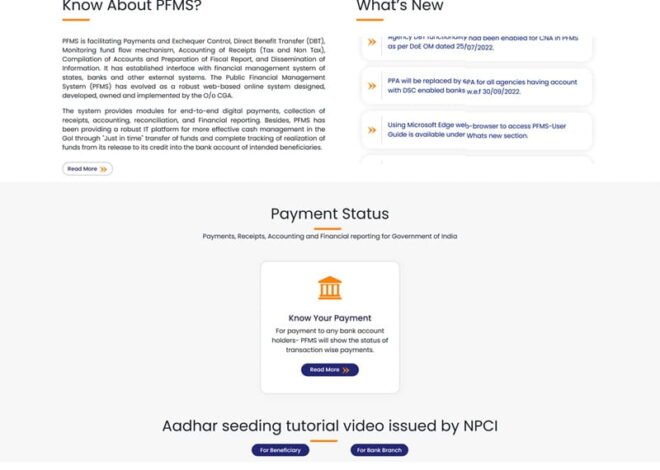
This is where PFMS (Public Financial Management System) becomes essential. It gives state governments a clear, structured way to track funds, report utilization, and maintain accountability—all in one place.
Instead of relying on delayed paperwork and scattered reports, states now use PFMS to monitor scheme performance in near real time.
Why Reporting Matters in Centrally Sponsored Schemes
In CSS, the central government releases funds based on:
- Utilization of previous funds
- Progress of the scheme
- Accuracy of financial reporting
If reporting is delayed or incorrect, future fund releases can get stuck.
This makes PFMS not just a tracking tool, but a critical reporting system for states.
How PFMS Simplifies Reporting for State Governments
PFMS replaces traditional reporting methods with a digital system that is:
- Faster
- More accurate
- Easily accessible
State departments can generate reports instantly without waiting for manual compilation.
Core Functions of PFMS in Scheme Reporting
1. Real-Time Expenditure Tracking
State governments can monitor:
- How much money has been spent
- Which department or district used it
- Remaining balance
This helps in preparing accurate reports at any time.
2. Scheme-Wise Financial Reporting
PFMS allows detailed reporting for each scheme:
- Allocation vs expenditure
- State share vs central share
- Component-wise spending
This is especially important for CSS, where multiple funding layers exist.
3. Automated Report Generation
Instead of manual reports, PFMS generates:
- Monthly expenditure statements
- Utilization certificates (UCs)
- Financial summaries
These reports are standardized and accepted by central ministries.
4. Integration with State Departments
PFMS connects with:
- Line departments (health, education, rural development, etc.)
- State treasuries
- Implementing agencies
This ensures that reporting data is collected automatically from multiple sources.
5. Monitoring Fund Utilization at Ground Level
PFMS allows states to track spending down to:
- District level
- Block level
- Implementing agency level
This detailed view improves the quality of reporting.
Role of Utilization Certificates (UCs)
Utilization Certificates are crucial in CSS reporting.
- They confirm that funds have been used properly
- Required for release of next installment
- Must match PFMS data
PFMS helps generate and validate UCs digitally, reducing errors and delays.
How PFMS Improves Accuracy in Reporting
1. Data Validation
PFMS checks for:
- Duplicate entries
- Incorrect data
- Mismatch in fund usage
This ensures reports are reliable.
2. Single Source of Truth
All financial data is stored in one system, avoiding confusion from multiple records.
3. Reduced Human Error
Automation minimizes manual mistakes in calculations and reporting.
Benefits for State Governments
1. Faster Fund Release
Accurate reporting ensures timely release of central funds.
2. Better Financial Planning
States can plan budgets based on real-time data.
3. Improved Transparency
Clear reporting builds trust between Centre and States.
4. Stronger Audit Readiness
PFMS records make audits smoother and quicker.
5. Performance Monitoring
States can track which districts or departments are performing well.
Challenges in Using PFMS for Reporting
Despite its advantages, some issues remain:
- Data entry delays at local levels
- Limited technical skills in rural areas
- Integration issues with older systems
- Dependence on timely updates from departments
However, training and system upgrades are improving these areas.
Recent Developments (2025–2026)
- Enhanced dashboards for better reporting visualization
- Faster UC generation and approval systems
- Increased focus on real-time reporting compliance
- Integration with more state-level financial systems
👉 PFMS reporting features: https://pfms.nic.in/SitePages/Reports.aspx
These updates aim to make reporting more efficient and accurate.
Best Practices for Effective PFMS Reporting
State governments can improve reporting by:
- Updating data regularly, not in batches
- Ensuring all agencies are onboarded on PFMS
- Training staff at district and block levels
- Cross-checking data before submitting reports
- Using dashboards for continuous monitoring
Consistent usage leads to better outcomes.
Impact on Governance
PFMS has changed how reporting works in government schemes.
Earlier:
- Reports were delayed
- Data was inconsistent
- Monitoring was weak
Now:
- Reporting is faster
- Data is reliable
- Decision-making is data-driven
This shift has improved the overall efficiency of Centrally Sponsored Schemes.
FAQs
1. What is PFMS used for in CSS reporting?
PFMS is used to track fund utilization, generate reports, and ensure accurate financial reporting.
2. Why are utilization certificates important?
They confirm proper use of funds and are required for further fund release.
3. Can states generate reports directly from PFMS?
Yes, PFMS provides automated report generation features.
4. Does PFMS track district-level data?
Yes, it allows monitoring down to district and even block levels.
5. What happens if reporting is delayed?
Future fund releases from the central government may be delayed.
6. Is PFMS mandatory for CSS?
Yes, it is widely used for tracking and reporting central scheme funds.
Conclusion
For state governments, managing Centrally Sponsored Schemes is not just about spending money—it’s about proving how effectively that money is used.
PFMS makes this possible by turning complex financial data into clear, structured reports. It connects departments, tracks utilization, and ensures that every rupee is accounted for.
In today’s governance system, accurate reporting is just as important as implementation. And PFMS has become the backbone that supports both.