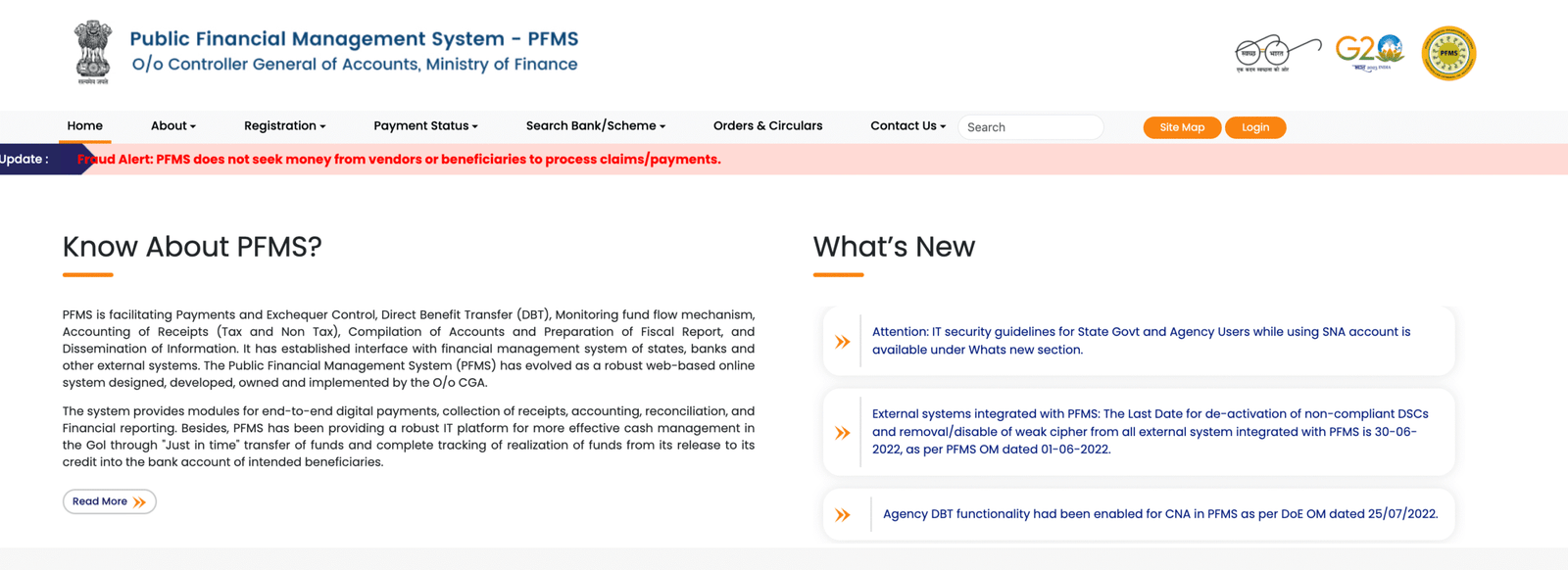
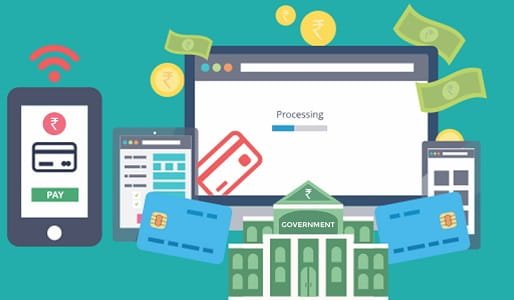
India’s public finance system is becoming more connected than ever before. Earlier, different parts of the system—budgeting, payments, accounting, and reporting—often worked separately. This created delays, duplication, and gaps in…
Scholarship money not showing up in your bank account can be frustrating—especially when everything looks “approved” on the portal. In most cases, the issue is not rejection but a small…
If your payment is stuck, showing failed, or not visible at all, the PFMS helpdesk is the right place to reach out. But before contacting them, it helps to know…
Government finance in India doesn’t run through a single pipe. There are central ministries, state treasuries, departments, and thousands of field offices. Each one handles part of the money flow.…
India’s Public Financial Management System (PFMS) has already transformed how government money moves—bringing real-time tracking, Direct Benefit Transfers (DBT), and digital payments into one platform. Now, the government is moving…

How PFMS Is Evolving to Handle Increasing Transaction Volumes

PFMS (Public Financial Management System) was built for scale—but the last few years have pushed it even further. With crores of beneficiaries, expanding Direct Benefit Transfer (DBT) schemes, and rising digital payments, the system now handles massive daily transaction loads. To keep up, PFMS is not standing still. It is continuously evolving—technically, structurally, and operationally—to […]

4 mins read

PFMS and NPCI: Aadhaar-Linked Payment Validation Explained

When government money reaches people directly into their bank accounts, it often travels through a system that uses Aadhaar instead of traditional account details. This system is powered by the coordination between PFMS (Public Financial Management System) and NPCI (National Payments Corporation of India). Together, they make Aadhaar-based payments fast, accurate, and scalable across the […]

5 mins read

What Is Bharatkosh? PFMS’s Online Non-Tax Revenue Portal Explained

Not all money collected by the government comes from taxes. There are many other sources—fees, penalties, service charges, and deposits. Managing these non-tax revenues used to be slow and paperwork-heavy. That’s where Bharatkosh comes in. Bharatkosh is an online platform under PFMS (Public Financial Management System) that allows individuals, businesses, and organizations to deposit money […]

4 mins read

PFMS and Scholarship Schemes: Complete Integration Guide

Scholarship schemes are meant to support students who need financial help for education. But managing thousands—or even millions—of payments across states, institutions, and banks is not simple. Delays, duplication, and errors were common earlier. That’s where PFMS (Public Financial Management System) has changed the system. It connects government departments, banks, and beneficiaries into one digital […]

5 mins read

PFMS and eBill System: Digital Payments for Government Offices

Government offices handle thousands of bills every day—salaries, vendor payments, reimbursements, utility bills, and more. Earlier, most of this work depended on paper files, physical signatures, and long approval chains. Payments were slow, tracking was difficult, and errors were common. The introduction of the eBill system integrated with PFMS (Public Financial Management System) has changed […]

5 mins read

How State Governments Use PFMS for Centrally Sponsored Scheme Reporting

Centrally Sponsored Schemes (CSS) are a core part of India’s development model. From rural roads to health insurance, these schemes are funded jointly by the Centre and the States. But managing and reporting such large-scale spending across thousands of districts and departments is not easy. This is where PFMS (Public Financial Management System) becomes essential. […]

5 mins read

PFMS and Finance Commission Grants: What States Need to Know

Finance Commission grants are a major source of funding for states and local bodies in India. These grants support essential services like rural development, urban infrastructure, health, sanitation, and disaster management. But handling such large volumes of public money requires strict monitoring. That’s where PFMS (Public Financial Management System) comes into the picture. It doesn’t […]

5 mins read