PFMS and Ayushman Bharat: How Health Scheme Payments Work
Ayushman Bharat has become a lifeline for millions of families in India. It covers major hospital expenses without putting pressure on household savings. But behind this smooth system is a strong financial backbone— PFMS (Public Financial Management System).
Let’s understand how payments actually work, step by step.
What is the link between PFMS and Ayushman Bharat?
Ayushman Bharat (PM-JAY) provides health insurance coverage of up to ₹5 lakh per family per year for secondary and tertiary care hospitalization.
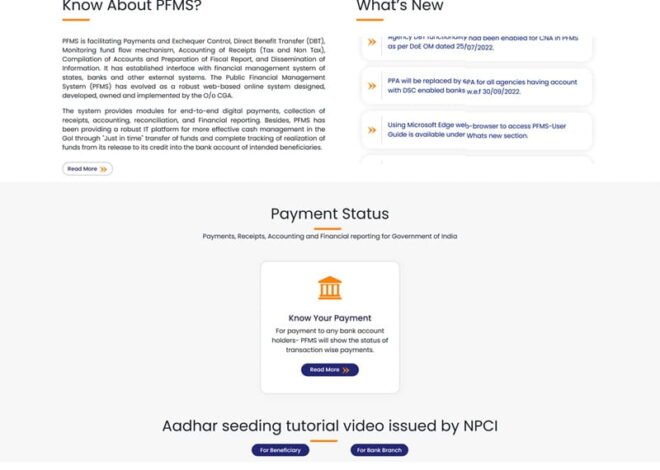
PFMS plays a key role in managing fund flow and payments under this scheme.
- Government allocates funds
- Payments to hospitals are processed digitally
- Every transaction is tracked through PFMS
👉 Official Ayushman Bharat portal: https://pmjay.gov.in/
👉 PFMS portal: https://pfms.nic.in/Home.aspx
This connection ensures transparency and faster payments.
How Payments Work Under Ayushman Bharat
Unlike subsidy schemes, beneficiaries don’t receive money directly. Instead:
- Patients get cashless treatment at empaneled hospitals
- Hospitals provide services
- Government pays hospitals through PFMS
So PFMS tracks payments from government to hospitals, not to patients.
Step-by-Step: How PFMS Tracks Health Scheme Payments
1. Beneficiary Identification
Eligible families are identified using SECC database and other criteria.
- Ayushman card is issued
- Details stored in central database
- Linked with scheme records
This ensures only genuine beneficiaries receive treatment.
2. Hospital Empanelment
Hospitals must register under Ayushman Bharat.
- Government verifies hospital facilities
- Packages and treatment rates are fixed
- Hospitals get access to the scheme portal
Only empaneled hospitals can raise claims.
3. Treatment and Claim Generation
When a patient gets admitted:
- Hospital verifies Ayushman card
- Treatment is provided cashless
- Claim is generated on the portal
This claim includes:
- Patient details
- Treatment cost
- Documents and reports
4. Claim Verification
Before payment, claims are verified:
- Medical audit checks treatment validity
- Fraud detection systems review claims
- State Health Agency (SHA) approves or rejects
Only valid claims move forward.
5. Payment Processing Through PFMS
Once approved, PFMS steps in.
- Payment file is generated
- Hospital bank details are verified
- Funds are released digitally
👉 Learn more about PFMS DBT system: https://pfms.nic.in/SitePages/about-Verticals-DBT.aspx
PFMS ensures payments are accurate and recorded.
6. Direct Payment to Hospitals
After processing:
- Money is transferred directly to hospital accounts
- No intermediaries involved
- Faster settlement of claims
This keeps hospitals financially stable and motivated.
7. Real-Time Tracking and Reporting
PFMS stores all transaction details:
- Amount paid
- Hospital name
- Date of payment
- Scheme details
Authorities can monitor payments in real time.
Key Features of PFMS in Ayushman Bharat
1. End-to-End Payment Tracking
From claim approval to payment, everything is digitally recorded.
2. Transparency
Every transaction is visible to authorities.
3. Faster Claim Settlement
Hospitals receive payments quickly compared to traditional systems.
4. Fraud Control
Duplicate or fake claims can be identified easily.
5. Centralized Monitoring
Government can track scheme performance across states.
6. Digital Integration
PFMS connects with banks, state agencies, and hospital systems.
Importance of PFMS in Health Scheme Payments
1. Builds Trust in the System
Hospitals are more willing to participate when payments are reliable.
2. Reduces Delays
Automated processing speeds up claim settlement.
3. Prevents Corruption
No manual handling means fewer chances of manipulation.
4. Improves Healthcare Access
Smooth payments encourage hospitals to treat more patients.
5. Better Policy Decisions
Real-time data helps government improve scheme coverage and pricing.
Common Issues in Payment Flow
Even with PFMS, some challenges exist:
- Delay in claim verification
- Incorrect hospital bank details
- Technical glitches in portal
- Fraud checks causing extra processing time
These are gradually improving with system upgrades.
Recent Updates (2025–2026)
- Increased focus on fraud detection using AI tools
- Faster claim settlement targets introduced
- More private hospitals being empaneled
- Integration with digital health records improving
👉 Check scheme details: https://pmjay.gov.in/about/pmjay
These updates aim to strengthen the system further.
FAQs
1. Do patients receive money under Ayushman Bharat?
No, treatment is cashless. Payments are made directly to hospitals through PFMS.
2. How are hospitals paid?
After claim approval, PFMS transfers funds directly to hospital bank accounts.
3. Can payment status be tracked?
Yes, authorities can track payments through PFMS dashboards and reports.
4. What happens if a claim is rejected?
The hospital does not receive payment. It may correct errors and resubmit.
5. How long does payment take?
It varies, but efforts are being made to reduce delays and ensure faster settlement.
6. Is PFMS used in all states?
Yes, PFMS is widely used for fund tracking across central government schemes, including Ayushman Bharat.
Conclusion
PFMS is the silent engine that powers payments under Ayushman Bharat. While patients enjoy cashless treatment, PFMS ensures hospitals get paid accurately and on time.
From claim generation to final payment, every step is tracked digitally. This creates a transparent and efficient system that benefits both patients and healthcare providers.
In simple terms, PFMS makes sure that healthcare funding actually works on the ground—not just on paper.