PFMS and Finance Commission Grants: What States Need to Know
Finance Commission grants are a major source of funding for states and local bodies in India. These grants support essential services like rural development, urban infrastructure, health, sanitation, and disaster management. But handling such large volumes of public money requires strict monitoring.
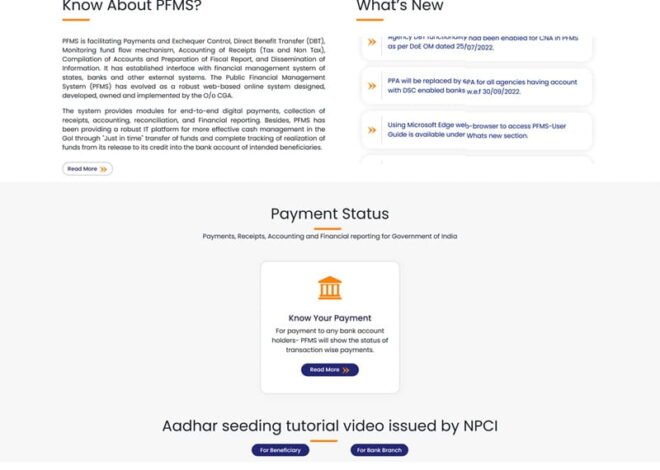
That’s where PFMS (Public Financial Management System) comes into the picture. It doesn’t just process payments—it brings visibility, control, and accountability to how these grants are used.

Understanding Finance Commission Grants in Practice
Every five years, the Finance Commission recommends how funds should be distributed between the Centre and the States. These include:
- Revenue Deficit Grants
- Local Body Grants (Rural and Urban)
- Disaster Management Grants
- Sector-specific and performance-based grants
👉 Finance Commission details: https://fincomindia.nic.in/
👉 PFMS portal: https://pfms.nic.in/Home.aspx
These funds are critical for state-level governance and grassroots development.
How PFMS Supports States in Managing These Grants
PFMS works more like a financial control tower rather than just a payment tool. For states, it provides a structured way to manage large-scale public funds.
1. Centralized Fund Visibility
States can view:
- Total funds received
- Scheme-wise allocation
- Release timelines
This helps finance departments plan spending better.
2. Tracking Utilization at Multiple Levels
Finance Commission grants often go beyond state capitals:
- Funds move to districts
- Then to local bodies like Panchayats and Municipalities
PFMS allows states to monitor utilization at each level without relying only on manual reports.
3. Real-Time Financial Reporting
Instead of waiting for monthly or quarterly reports:
- PFMS provides live data
- States can track expenditure instantly
- Reports can be generated anytime
This is useful during audits and budget reviews.
4. Improved Budget Discipline
With PFMS:
- States can avoid over-spending or under-utilization
- Fund usage is aligned with approved purposes
- Deviations are easier to detect
This ensures that grants are used as intended.
5. Integration with State Treasuries and Agencies
PFMS connects with:
- State treasuries
- Implementing departments
- Local bodies
This creates a unified system where all financial data flows into one platform.
Key Features States Should Focus On
1. End-to-End Financial Tracking
Even though funds pass through multiple layers, PFMS keeps a digital record at each stage.
2. Audit-Ready Data
All transactions are stored and can be reviewed anytime.
3. Direct Transfers to Local Bodies
In some cases, funds can be routed directly to local entities, reducing delays.
4. Standardized Reporting Format
States follow a uniform system, making comparisons and analysis easier.
5. Data-Driven Decision Making
Real-time insights help states adjust spending priorities quickly.
Why PFMS Matters for Finance Commission Grants
1. Strengthens Fiscal Transparency
Public funds are traceable, which improves trust in governance.
2. Reduces Leakages
Digital tracking minimizes chances of fund diversion.
3. Supports Decentralization
Local bodies receive funds more efficiently.
4. Enhances Accountability
Officials at every level are accountable for fund usage.
5. Improves Grant Performance Monitoring
Performance-based grants require proper tracking—PFMS makes that possible.
Practical Impact on Local Bodies
Finance Commission grants are often meant for local development. PFMS helps ensure:
- Panchayats receive funds on time
- Urban bodies can plan infrastructure projects better
- Spending aligns with ground-level needs
Without such a system, delays and inefficiencies would be common.
Challenges States Still Face
Despite improvements, some issues remain:
- Limited digital capacity in smaller local bodies
- Delays in updating expenditure data
- Training gaps among staff
- Integration issues with older state systems
These challenges are gradually being addressed through training and system upgrades.
Recent Developments (2025–2026)
- Stronger push for real-time utilization reporting
- Enhanced PFMS dashboards for state finance departments
- Greater emphasis on performance-linked grants tracking
- Increased digital training programs for local bodies
👉 Finance Commission reports: https://fincomindia.nic.in/ShowContentOne.aspx?id=9
These changes are aimed at improving both efficiency and accountability.
What States Should Focus On Going Forward
For better use of Finance Commission grants, states should:
- Ensure all implementing agencies are onboarded on PFMS
- Maintain updated beneficiary and agency data
- Monitor utilization regularly, not just at year-end
- Invest in training for local-level staff
- Use PFMS reports for planning and decision-making
A proactive approach makes a big difference.
FAQs
1. What are Finance Commission grants used for?
They are used for development activities like infrastructure, health, sanitation, and disaster management.
2. How does PFMS help states manage these grants?
PFMS provides real-time tracking, reporting, and monitoring of fund usage.
3. Can states monitor local body spending through PFMS?
Yes, PFMS allows tracking down to district and local body levels.
4. Why is PFMS important for audits?
It maintains complete transaction records, making audits easier and more accurate.
5. Are all states using PFMS?
Most states use PFMS for central scheme funds, including Finance Commission grants.
6. What happens if funds are not utilized properly?
States may face audit objections, delays in future releases, or penalties in performance-based grants.
Conclusion
Finance Commission grants play a crucial role in strengthening state and local governance. But their impact depends on how well they are managed.
PFMS brings order to this complexity. It gives states a clear view of funds, ensures accountability at every level, and helps turn financial allocations into real development outcomes.
In simple terms, PFMS doesn’t just track money—it helps states use it wisely.