Real-Time Expenditure Reporting on PFMS: A Guide for Officials
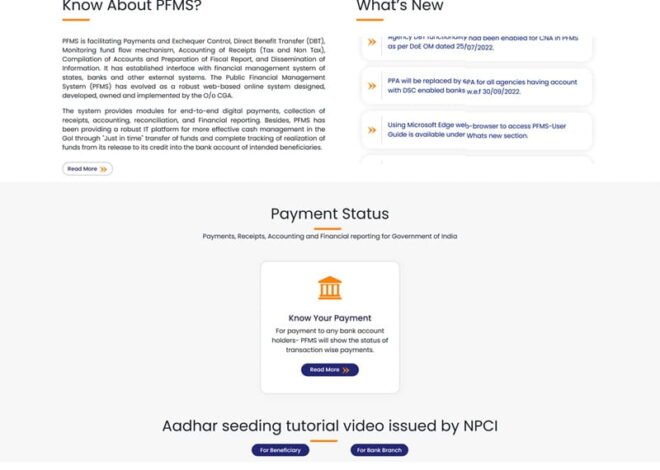
Government spending doesn’t wait for month-end anymore. With PFMS (Public Financial Management System), officials can see how much has been spent, where it went, and what remains—almost instantly. This shift to real-time expenditure reporting has changed how decisions are made across ministries, states, and districts.
For officials on the ground, this is not just a feature. It’s a daily working tool.
What “Real-Time Reporting” Means in PFMS
In simple terms:
- Every payment recorded in PFMS updates the system immediately
- Expenditure data becomes visible without delay
- Reports reflect current financial status, not past estimates
👉 PFMS portal: https://pfms.nic.in/Home.aspx
This eliminates the old system of delayed, manual reporting.
Why Real-Time Reporting Matters for Officials
Officials are responsible for:
- Monitoring scheme progress
- Ensuring proper fund utilization
- Reporting to higher authorities
With real-time data, they can:
- Identify issues early
- Take quick corrective action
- Avoid last-minute reporting pressure
How Real-Time Reporting Works in Practice
1. Payment Entry in PFMS
Whenever a payment is initiated:
- Details are entered into PFMS
- Beneficiary and amount are specified
2. Validation and Processing
PFMS checks:
- Bank details
- Scheme eligibility
- Budget availability
Only valid transactions proceed.
3. Instant Data Update
Once payment is processed:
- Expenditure data is updated immediately
- Dashboard reflects new totals
4. Availability in Reports
Updated data appears in:
- MIS reports
- Dashboards
- Scheme-wise summaries
Officials can access it anytime.
Key Data Available in Real-Time
Officials can view:
1. Total Expenditure
- Amount spent under each scheme
2. Remaining Balance
- Funds still available
3. State/District-Level Data
- Region-wise spending
4. Payment Status
- Successful, pending, or failed transactions
5. Beneficiary Details
- Who received the payment
Tools Officials Use in PFMS
1. Dashboards
- Visual overview of fund usage
- Graphs and summaries
2. MIS Reports
- Detailed financial reports
- Scheme-wise and region-wise data
3. Transaction Logs
- Complete history of payments
These tools help officials stay updated at all times.
Benefits for Government Officials
1. Faster Decision-Making
No need to wait for reports—data is already available.
2. Better Monitoring
Officials can track progress daily.
3. Improved Accuracy
Data comes directly from transactions, reducing errors.
4. Stronger Accountability
Every transaction is recorded and traceable.
5. Efficient Fund Management
Helps avoid under-utilization or overspending.
Practical Use Cases
For District Officials
- Track scheme spending in real time
- Identify delays at local level
For State Departments
- Monitor district-wise performance
- Ensure timely utilization
For Central Ministries
- Get national-level overview instantly
Common Challenges in Real-Time Reporting
Some issues may still occur:
- Delay in data entry at field level
- Incorrect transaction details
- Internet connectivity issues
- Lack of training among staff
These can affect data accuracy temporarily.
Best Practices for Officials
To use real-time reporting effectively:
- Enter data immediately after transactions
- Verify details before submission
- Check dashboards regularly
- Resolve failed transactions quickly
- Avoid bulk updates at month-end
Consistency is key.
Recent Updates (2025–2026)
- Enhanced dashboards with better visualization
- Faster data refresh rates
- Improved mobile accessibility
- Better integration with state systems
👉 PFMS reports: https://pfms.nic.in/SitePages/Reports.aspx
These updates are improving usability.
How Real-Time Reporting Improves Governance
The impact goes beyond convenience:
- Reduces delays in fund utilization
- Improves transparency across departments
- Enables data-driven policy decisions
- Strengthens financial discipline
This leads to better outcomes on the ground.
FAQs
1. What is real-time reporting in PFMS?
It means expenditure data is updated immediately after transactions.
2. Who can access real-time data?
Authorized officials at central, state, and local levels.
3. Is the data always accurate?
It is highly accurate, but depends on correct data entry.
4. Can reports be generated instantly?
Yes, most reports are available instantly.
5. What happens if data is not updated?
Reports may show incomplete or outdated information.
6. Is PFMS accessible on mobile devices?
Some features are accessible, and improvements are ongoing.
Conclusion
Real-time expenditure reporting through PFMS has transformed how officials manage public funds. It replaces delayed, manual systems with instant, reliable data that supports better decision-making.
For officials, this means more control, better visibility, and improved accountability. In a system where every rupee matters, real-time reporting ensures that nothing goes unnoticed—and everything stays on track.