How PFMS Is Evolving to Handle Increasing Transaction Volumes
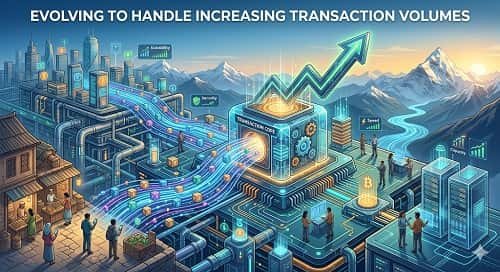
PFMS (Public Financial Management System) was built for scale—but the last few years have pushed it even further. With crores of beneficiaries, expanding Direct Benefit Transfer (DBT) schemes, and rising digital payments, the system now handles massive daily transaction loads.
To keep up, PFMS is not standing still. It is continuously evolving—technically, structurally, and operationally—to manage higher volumes without slowing down.
Why Transaction Volumes Are Increasing
Several factors are driving the surge:
- Expansion of DBT schemes across sectors
- Growth in beneficiary base (farmers, students, workers)
- More frequent payments (monthly, weekly, real-time)
- Integration with multiple ministries and states
PFMS portal: https://pfms.nic.in/Home.aspx
This has transformed PFMS from a tracking system into a high-volume payment engine.
The Core Challenge
Handling high transaction volumes is not just about speed. PFMS must ensure:
- Accuracy of payments
- Real-time processing
- System stability
- Data security
Even a small delay or error can affect lakhs of beneficiaries.
How PFMS Is Scaling Technically
1. Stronger System Architecture
PFMS is moving toward:
- Distributed system design
- Load-balanced servers
- Scalable cloud-like infrastructure
This allows the system to handle peak loads without crashing.
2. Batch and Parallel Processing
Instead of processing transactions one by one:
- Payments are grouped into batches
- Multiple processes run in parallel
This increases speed and efficiency.
3. High-Performance Databases
PFMS uses improved database systems to:
- Store large volumes of data
- Retrieve information quickly
- Support real-time updates
4. API-Based Integration
PFMS connects with:
- Banks
- NPCI
- State systems
Using APIs:
- Faster communication
- Reduced delays
- Real-time data exchange
Improvements in Payment Processing
1. Faster Validation Systems
PFMS has improved:
- Bank account validation
- Aadhaar verification
- Duplicate detection
This reduces processing time.
2. Optimized Payment Routing
System decides the best route:
- NEFT/RTGS
- Aadhaar Payment Bridge
This ensures efficient delivery.
3. Retry and Failure Handling
If a payment fails:
- System identifies the issue
- Allows quick correction
- Reprocesses transactions
This reduces backlog.
Role of PFMS 2.0 in Scaling
The upcoming PFMS 2.0 upgrade focuses heavily on scalability:
- AI-based monitoring
- Advanced analytics
- Better system performance
- Improved dashboards
This will further strengthen transaction handling.
How PFMS Maintains Stability
1. Load Management
System distributes traffic evenly across servers.
2. Peak-Time Optimization
Handles heavy loads during:
- Scheme payment cycles
- Month-end processing
3. System Monitoring
Real-time monitoring helps:
- Detect issues early
- Prevent system downtime
Ensuring Accuracy at Scale
Even with high volumes, accuracy is critical.
PFMS ensures this through:
- Multi-level validation checks
- Data consistency rules
- Real-time error detection
This reduces incorrect payments.
Security Enhancements
Handling large transactions requires strong security:
- Encrypted data transmission
- Secure banking integration
- Access control systems
This protects financial data.
Benefits of These Improvements
1. Faster Payments
Beneficiaries receive money quicker.
2. Reduced Failures
Better validation reduces transaction errors.
3. High Reliability
System remains stable even under heavy load.
4. Better User Experience
Officials and agencies face fewer delays.
Challenges Still Being Addressed
Despite progress, some challenges remain:
- Sudden spikes in transaction volume
- Dependency on bank systems
- Network issues in rural areas
- Data entry delays
Continuous upgrades are addressing these.
Recent Developments (2025–2026)
- Expansion of high-capacity infrastructure
- Faster API integration with banks and NPCI
- Improved failure tracking systems
- Enhanced dashboards for monitoring
PFMS system updates: https://pfms.nic.in/SitePages/Features.aspx
These changes are making PFMS more robust.
What This Means for the Future
PFMS is evolving into:
- A high-speed payment platform
- A real-time financial monitoring system
- A scalable infrastructure for digital governance
It is ready to handle future growth.
FAQs
1. Why is PFMS handling more transactions now?
Due to expansion of DBT schemes and increasing beneficiaries.
2. How does PFMS manage high volumes?
Through scalable architecture, batch processing, and API integration.
3. What is PFMS 2.0?
An upgraded version focused on performance, analytics, and scalability.
4. Does high volume affect accuracy?
No, validation systems ensure accuracy.
5. What happens during system overload?
Load balancing and optimization prevent failures.
6. Is PFMS secure for large transactions?
Yes, it uses strong security and encryption systems.
Conclusion
PFMS is no longer just a tracking system—it is a high-volume digital payment backbone for the government. As transaction volumes grow, the system is evolving with stronger technology, faster processing, and better integration.
In a country where millions depend on timely payments, this evolution is essential. PFMS is not just keeping up with demand—it is preparing for the future of digital governance.


