PFMS and NPCI: Aadhaar-Linked Payment Validation Explained
When government money reaches people directly into their bank accounts, it often travels through a system that uses Aadhaar instead of traditional account details. This system is powered by the coordination between PFMS (Public Financial Management System) and NPCI (National Payments Corporation of India).
Together, they make Aadhaar-based payments fast, accurate, and scalable across the country. But what really makes it work is the validation process that happens before money is transferred.
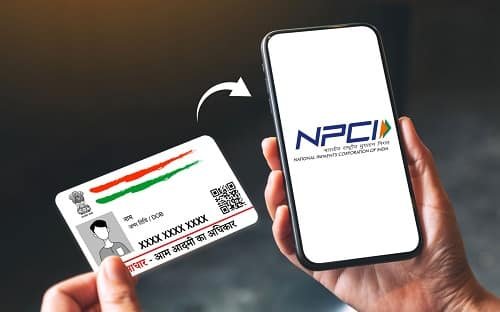
The Bigger Picture Behind Aadhaar-Based Payments
In many government schemes today, payments don’t always depend on bank account numbers. Instead, Aadhaar acts as a unique financial address.
- Beneficiary provides Aadhaar number
- Aadhaar is linked to a bank account
- Payment is routed using this linkage
👉 PFMS portal: https://pfms.nic.in/Home.aspx
👉 NPCI Aadhaar services: https://www.npci.org.in/what-we-do/apb/product-overview
This method is widely used in Direct Benefit Transfer (DBT) schemes.
Role of PFMS in Aadhaar-Linked Payments
PFMS acts as the payment initiator and controller.
- It prepares the payment file
- Validates beneficiary data
- Sends payment instructions
But PFMS does not decide which bank will receive the money when Aadhaar is used. That’s where NPCI comes in.
Role of NPCI in Aadhaar Payment Validation
NPCI operates the Aadhaar Payment Bridge (APB).
- Maintains Aadhaar-bank mapping database
- Identifies the destination bank
- Routes payments correctly
In simple terms, PFMS sends the request, and NPCI ensures it reaches the correct bank.
Step-by-Step: How Aadhaar-Based Payment Validation Works
1. Aadhaar Seeding with Bank Account
Before any payment:
- Beneficiary links Aadhaar with bank account
- Bank updates this information in NPCI system
- Aadhaar becomes a payment identifier
Without proper seeding, payment cannot proceed.
2. Beneficiary Data Entry in PFMS
Government departments upload:
- Aadhaar number
- Scheme details
- Payment amount
PFMS prepares this data for validation.
3. Aadhaar Format and Basic Validation
PFMS checks:
- Aadhaar number format
- Duplicate entries
- Missing or incorrect data
Only valid records move forward.
4. NPCI Mapping Check (Core Validation Step)
PFMS sends Aadhaar details to NPCI:
- NPCI checks Aadhaar mapping
- Identifies linked bank
- Confirms whether mapping is active
If Aadhaar is not mapped, payment fails at this stage.
5. Payment Routing via Aadhaar Payment Bridge (APB)
Once validated:
- PFMS sends payment file to NPCI
- NPCI routes payment to mapped bank
- Bank credits beneficiary account
No account number is needed in this process.
6. Bank-Level Validation
Receiving bank checks:
- Account status (active/inactive)
- KYC compliance
- Account eligibility
If everything is correct, money is credited.
7. Status Confirmation Back to PFMS
After processing:
- Bank sends status to NPCI
- NPCI updates PFMS
- PFMS records success or failure
This completes the validation cycle.
Types of Validation Involved
1. Aadhaar Format Validation
Ensures Aadhaar number is correct in structure.
2. NPCI Mapping Validation
Confirms Aadhaar is linked to a valid bank account.
3. Bank Account Status Check
Ensures account is active and usable.
4. Duplicate Detection
Prevents multiple payments to same beneficiary.
5. Scheme-Level Validation
Checks eligibility under specific scheme rules.
Why Aadhaar-Based Validation Is Important
1. Eliminates Need for Bank Details
No need to remember account numbers or IFSC codes.
2. Ensures Accurate Targeting
Payments reach the correct person linked to Aadhaar.
3. Reduces Errors
Less chance of wrong account entry.
4. Supports Large-Scale Payments
Ideal for schemes covering millions of beneficiaries.
5. Enhances Financial Inclusion
Even rural users can receive payments easily.
Common Reasons for Payment Failure
Even with strong validation, failures can happen:
- Aadhaar not linked to any bank account
- Multiple bank accounts linked, but wrong mapping active
- Bank account closed or inactive
- KYC not completed
- NPCI mapping outdated
These issues must be fixed before retrying payment.
Key Features of PFMS–NPCI Integration
1. Seamless Data Exchange
PFMS and NPCI communicate instantly through secure systems.
2. Real-Time Mapping Check
Ensures correct bank is identified before payment.
3. High Transaction Capacity
Handles millions of DBT payments daily.
4. Secure Infrastructure
Encrypted systems protect beneficiary data.
5. Centralized Tracking
PFMS records every transaction and status.
Recent Improvements (2025–2026)
- Faster Aadhaar mapping updates
- Improved NPCI validation accuracy
- Better failure reporting in PFMS
- Enhanced duplicate detection systems
👉 NPCI updates: https://www.npci.org.in/what-we-do/apb/live-members
These updates are making Aadhaar-based payments more reliable.
Tips for Beneficiaries
To avoid payment issues:
- Ensure Aadhaar is linked to active bank account
- Complete KYC in bank
- Use only one primary bank account for DBT
- Check mapping status with bank
- Keep mobile number updated for alerts
These small steps can prevent delays.
FAQs
1. What is Aadhaar Payment Bridge (APB)?
It is a system by NPCI that routes payments using Aadhaar instead of bank account numbers.
2. How does PFMS use Aadhaar for payments?
PFMS sends Aadhaar-based payment instructions, which are routed through NPCI.
3. What is NPCI mapping?
It is the linking of Aadhaar with a specific bank account in NPCI’s database.
4. Can one Aadhaar be linked to multiple banks?
Yes, but only one bank is active for DBT at a time.
5. Why does Aadhaar payment fail?
Common reasons include missing mapping, inactive account, or incomplete KYC.
6. How can I check Aadhaar-bank linking?
You can check it through your bank or Aadhaar services portal.
Conclusion
PFMS and NPCI together form the backbone of Aadhaar-based payments in India. While PFMS manages payment processing, NPCI ensures that funds are routed correctly using Aadhaar mapping.
The validation process between these two systems is what makes DBT reliable. It checks identity, confirms bank linkage, and ensures money reaches the right account.
In a system handling millions of transactions daily, this coordination is not just important—it’s essential for accuracy, speed, and trust.


